

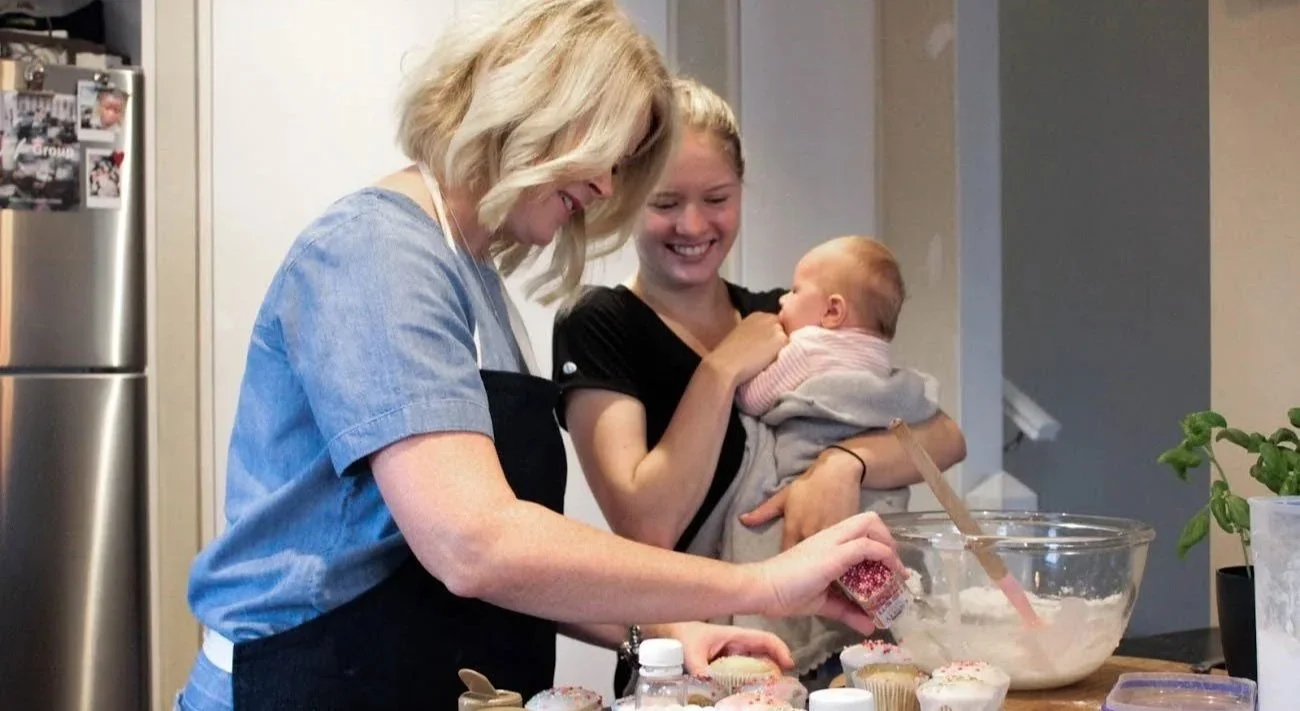
Against a white stucco wall leans a children’s bike, training wheels still in motion. Inside, the smell of freshly baked biscuits escapes the oven, and a group gather around a kitchen table, loudly swapping stories from their day and passing around steaming baskets of bread rolls.
The house has all the hallmarks of a happy family home - Friday night pizza nights, a buzz of energetic conversation and bookshelves spilling over with tattered children's hardbacks. But this isn’t a family home, at least not in the traditional sense. Welcome to The House of Grace.
Evolving care for women
In 1879, Alexandra Home for Friendless Women was opened on Little Taranaki Street (now Egmont Street) by the Wellington Ladies’ Christian Association. Spearheaded by teacher and social worker Ellen Greenwood, the home provided medical care, shelter and opportunities to build domestic skills for homeless, ill or unmarried pregnant women. At the time, social stigma was high with such women’s homes designed to conceal pregnancies and encourage, often forcibly, newborn adoption.
Renamed the Alexandra Home for Unwed Mothers in 1885, the home became a premises to train midwives following the introduction of The Midwives Act (1904), soon opening in Newtown after the Little Taranaki Street home was quickly outgrown.
As time went on, societal attitudes shifted, more married pregnant women accessed their services and it became more socially acceptable to keep children born out of wedlock, it was renamed The Alexandra Home, operating from Newtown’s Rintoul Street until it closed its doors in 1991. On the site still sits Alexandra Rest Home – a nod to the many chapters of its past.
A family-centric environment
The idea for The House of Grace first came to co-founders Treena and the late Marcus van Rijssel after taking a young mum into their own home. They quickly discovered the lack of other options for women in the same position – while attitudes to young mums may have changed since a century before, the need for a safe, supportive space had not.
In contrast to the isolated and often institution-like homes of the past, Treena and Marcus wanted to provide a family, home-based environment, which gave young women the chance to build key life skills, prepare to be the best possible mothers, gain confidence and access support as they navigated this significant life change. They embarked on a trip to the US to research alternative models of care, returning to establish The House of Grace Trust in 2001.
The vision was simple. “We exist to see that every young mum can thrive and have hope for the future, no matter what the circumstances are or how their journey began,” says former Director and House Parent, Fiona Collins. “We’re here during a really crucial time in the lives of young mums and young babies, to lay the foundations of their future.”
A happy home
Although The Alexandra Home started over 120 years before The House of Grace, their stories would beautifully intersect. When the Alexandra Trust was formally wound down in 2006, its assets were transferred to The House of Grace Trust and were used to purchase their first home in Wellington. Later purchasing a second home in Hamilton, The House of Grace housed and cared for over 250 young women as they prepared for birth, cared for their newborns and set up a foundation for successful lives.
For former resident, Sharna, her time living at The House of Grace was a circuit breaker. Coming from a tough background of domestic violence, family instability and drugs, Sharna moved into the home at 37 weeks pregnant just days before the first COVID-19 lockdown was put in place. There, she found safety and stability as she welcomed her handsome son, Noah, into the world.
“When I lived at The House of Grace, I felt like someone was choosing to support me every day, and I had never felt chosen before,” says Sharna.
Over the 6-months of her stay, breastfeeding and parenting became second nature; she gained confidence in skills like cooking, valuable tools for independence and dealing with healthy conflict. She formed a close bond with her house parents, Abby and Jamie – so close that she asked Abby and Jamie to be Noah’s godparents, and she now lives with them.
“Everyone needs an Abby and Jamie in their lives," says Sharna. "Jamie has been the first ever safe male I have ever had in my life. He has been the big brother I always needed, and I couldn't have asked for a better uncle to have in my son's life," says Sharna.
“Two things I have learned are that I will be okay in the hardest seasons, I will get through anything and sometimes ‘family’ isn’t blood - it's the people who help you in your life and make your life worth living every day."
Noah is now a happy, thriving 6-year-old, who loves playing and watching rugby, and Sharna has big dreams for the future. Eventually, she would like to buy a home, buy her dream car (a UTE) and have a garden to grow her own vegetables and flowers. She has recently found a passion for boxing, and one day, would like to open an academy for woman who gone through or are recovering from trauma. “This is my story,” she says. “I am going to do things my way.”
Life-long connections
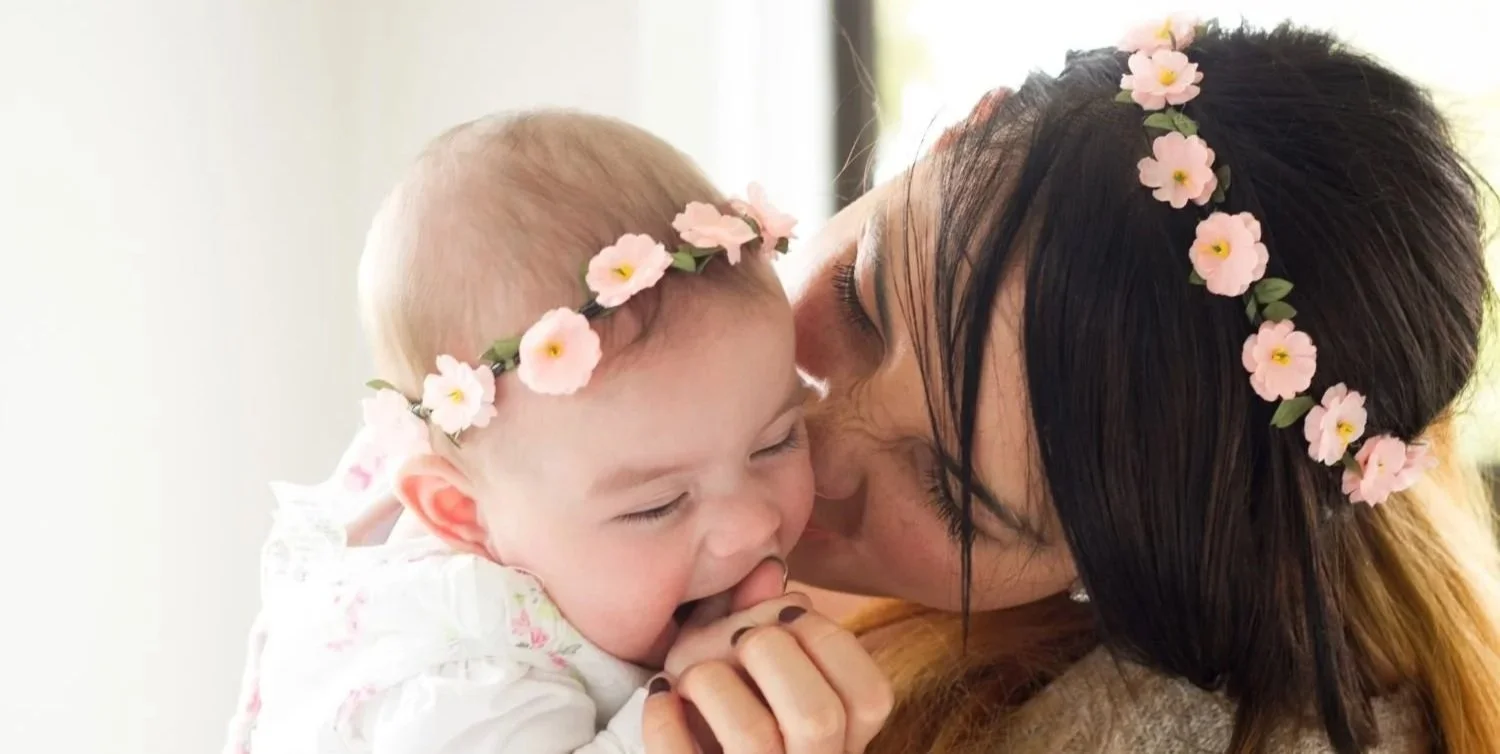
On a sunny Saturday morning, two women embrace. They’ve been meeting up every few months for the last 16 years. They’re now friends, but they first met when Natalie moved into The House of Grace and Naggie was working as a house parent. At the time, Natalie was studying and with no room at her mum’s house, had nowhere to go. She was referred to The House of Grace and moved in when she was 6 months pregnant.
The connections Natalie made there were pivotal. “The people at The House of Grace made the whole experience so positive. When you get pregnant young, there is sometimes an attitude that you won’t succeed,” says Natalie, “But The House of Grace made me see that this was just a bump in the road. They gave me that drive, that push to continue no matter what is going on.”
A new service model
As The House of Grace neared their 25th year of operation, they were facing challenges. The much-loved homes were becoming more expensive to run and although they were still committed to supporting young women, their service model was becoming unviable. “We know that much like 20-years ago, young women are facing incredibly hard circumstances,” says Chief Executive Officer, Rebecca Bangma. “It was crucial that we maintained our support but in a way that was relevant and flexible to respond to increasingly complex needs.”
The House of Grace decided to pivot, ceasing their residential care model and introducing a grants programme to support individuals, organisations and community groups who share their vision of caring for vulnerable mums. Through this programme, they have been able to extend their reach across Aotearoa New Zealand and support young women and their whānau in a range of ways.
For Natalie, the grant programme was yet another way she could access transformative support, as she had done during her stay some years before. Now with a young daughter with complex medical needs, Natalie applied for a grant to cover treatment costs, which are not government funded. “For me, that was the difference between her being able to access the treatment and not.”
Planning for the future
After one of The House of Grace’s homes was sold in 2025, the board considered how they could make the most of the proceeds. Establishing The House of Grace Trust Fund with Nīkau Foundation was an effective way to build a reliable source of funding, decrease their reliance on fundraising and ensure their story could continue.
Future grants distributed from The House of Grace Trust Fund will support young mums hoping to pursue educational or personal development opportunities, help fund practical everyday needs and unlock support for those caring for teenage or young mums.
“These grants are just another way that The House of Grace can be a part of the lives of amazing young wāhine as they experience challenges, enter different life stages and work to be their best selves, for them and their kids,” says Rebecca.
In 2006, the legacy of Alexandra Home was passed over to The House of Grace, representing a new chapter of care for young mums and their babies. In 2026, The House of Grace took steps to ensure that young women continue to receive support, know their value, can be the best possible parents and, like Sharna, feel chosen, through The House of Grace Trust Fund.
Support young mums, their tamariki and whānau long into the future.
To contribute to The House of Grace Trust Fund, there are a few giving options.


1. Donate online
You can donate online here.
2. Internet banking
Westpac – Lambton Quay – 03 0502 0163248 001
Once you have donated with the reference ‘Grace’, please let the Nikau Foundation team know by emailing accounts@nikaufoundation.nz with your name, address and noting that you would like to support The House of Grace Trust Fund.
3. Leave a bequest
If you’d like to leave a gift in your will to Nīkau Foundation’s House of Grace Trust Fund, you can add the below statement in your will:
To transfer (x% of the residue of my/our estate or whatever sum you wish to leave) to Nīkau Foundation (CC24793) to be paid into the House of Grace Trust Fund, to be dealt with by the trustees of the Foundation in accordance with the terms of that Fund.’
If you’d like to leave a bequest to the House of Grace Trust Fund, we’d encourage you to touch base with Nīkau Foundation so we can keep in touch, provide additional information and updates about the fund as it grows and provide policies on their gifting policies.
To touch base, please get in touch via info@nikaufoundation.nz.