

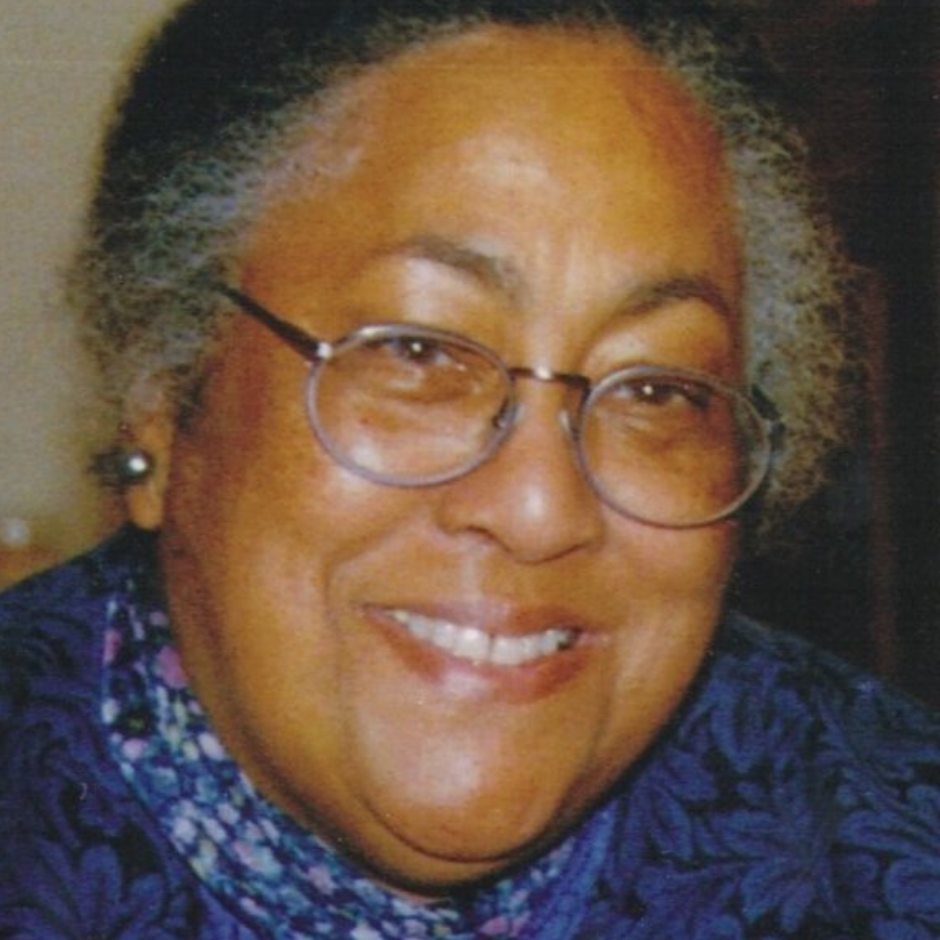
A powerful legacy for a much-loved music teacher.
In mid-2024, a trio took the stage of Wellington’s Michael Fowler Centre. As they begin to play, the climbing, emotive notes of Shostakovich’s Piano Trio Number 1 warmly envelop the space, pushing and pulling off the soaring wood ceilings.
The trio, named Shostos, is made up of Rangi Ruru Girls’ School students, Chloe Jiang on violin, Elise Tian on cello and Polly Lee on piano. They end the performance to rapturous applause and later that evening, go on to take out Chamber Music New Zealand’s 2024 Judith Clark National First Place Award in the very place Judith once came to enjoy and discover new music.
Unparalleled passion
Born in Wellington in 1931 to a musical family, Judith Clark started learning piano from the nuns at Mount Victoria’s Brougham Street convent at a young age before attending Mrs. Gertrude Johnson’s piano studio. In a Radio New Zealand interview with Charlotte Wilson, Judith spoke of a school field trip to the Wellington Town Hall to see Hungarian pianist, Lili Kraus. The trip proved to be a formative experience for Judith. Lili was “bursting to share her musical experiences” she recalled.
Halfway through her Bachelor of Arts study at Victoria University, Judith was awarded a New Zealand Government Scholarship to travel and study at the Royal Academy of Music in London. Prior to leaving, her professor Frederick Page encouraged her to take full advantage of the opportunity and fully immerse herself in the arts world. Judith took heed of this, and attended poetry readings, art exhibitions and performances outside of her syllabus and course work at every opportunity.
This would later be mirrored in her own teaching style, wherein she encouraged her contemporaries to look beyond their sheet music and consider the social context in which pieces were created and paralleling artistic movements, noted former student Miles Rogers in a 2015 Radio New Zealand interview.
Judith returned to New Zealand in 1963, following stints in Rome, Paris, Salzburg and Geneva. She brought with her a host of stylistic inspiration, technical magnificence and remarkable sensitivity to sound.
“Judith loved Europe,” says friend and former student, Peter Walls. “She was like a sponge for culture and appreciated the beauty that existed there.”
She took up a teaching position at Victoria University’s School of Music where she stayed for over 30 years, finishing her tenure as a senior lecturer and Head of Piano Studies. It was here that Peter, who had learned privately from Judith during his student years, found himself to be Judith’s colleague.
“Judith was one of those people that passion just emanated from,” he says. “It’s a really special quality - not just anyone has that.”
A demanding teaching style
Although Judith had a great sense of humour and kindness, she was demanding in her teaching style and expected her students to put in long hours to master technique. Former student, Emma Sayers, recalls her father waiting outside her lessons far beyond their expected finish time as she perfected her latest pieces inside.
“None dared present themselves for a performance or masterclass without scrupulous preparation,” noted Peter in Judith’s eulogy.
Influenced by the breadth of her experiences in Europe, Judith’s repertoire was vast, and she encouraged the same in her students. She nurtured their individuality, broadening their minds and allowing them to journey into less travelled parts of the musical lexicon.
“As well as Bach, Mozart, Haydn and Beethoven, Judith was interested in the avant garde and was a champion of New Zealand composition,” says friend, Sian Williamson.
A powerful musical legacy
Throughout her career, Judith was a fierce advocate for the music teaching profession and served as the president and long-time member of the governing council of the New Zealand Institute of Registered Music Teachers.
So deep was their appreciation for her contribution, that the Wellington branch commissioned a piece simply named “A piece for Judith” in 1988. It was premiered by Nicola Melville that year.
“Judith Clark was a truly deep lover of music, a fierce champion of the music of our time, with an unflagging energy and desire to seek out the treasures of the piano repertoire,” said Nicola (who now teaches piano at an American University) of her former teacher in an RNZ interview published in 2019.
In 1998, Judith was named as a Companion of the New Zealand Order of Merit for her significant contribution to music; a fitting acknowledgement for a lifetime of passion and inspiration.
Encouraging the next generation of musicians
Throughout her life, Judith taught hundreds of piano students, many of whom went on to be teachers, professional performers or academics. “Many prominent pianists in New Zealand have passed through Judith’s hands at some point,” Peter comments.
This included many students who may not have otherwise had the opportunity to access piano training.
As she had in life, Judith wanted to make sure that young musicians continued to gain valuable opportunities to develop musically. Following her death in 2014, the Judith Clark Endowment Fund was established with Nikau Foundation.
Since its establishment, the fund has supported many young people to access the transformative opportunities, education and training to unlock their musical potential, like so many did with Judith’s guidance.
As the notes climbed into the lofty ceiling of Wellington’s Michael Fowler Centre, Shostos’s moving rendition of Shostakovich’s Piano Trio Number 1 was a true testament of Judith’s enduring influence – an influence that will continue for generations to come.
For information on the applying for the Judith Clark Memorial Fellowship, please click here.
Provide opportunities, education and training for the next generation of musicians.
To contribute to Judith Clark’s incredible legacy, there are a few giving options.


1. Donate online
You can donate online here.
2. Internet banking
Westpac – Lambton Quay – 03 0502 0163248 001
Please use ‘JCEF’ as a reference and let the Nīkau Foundation team know by emailing accounts@nikaufoundation.nz with your name, address and noting that you would like to support the Judith Clark Endowment Fund.
3. Leave a bequest
If you’d like to leave a gift in your will to Nīkau Foundation’s Judith Clark Endowment Fund, you can add the below statement in your will:
To transfer (x% of the residue of my/our estate or whatever sum you wish to leave) to Nīkau Foundation (CC24793) to be paid into the Judith Clark Endowment Fund to be dealt with by the trustees of the Foundation in accordance with the terms of that Fund.’
If you’d like to leave a bequest to the Judith Clark Endowment Fund, we’d encourage you to touch base with Nīkau Foundation so we can keep in touch, provide additional information and updates about the fund as it grows and provide policies on their gifting policies.
To touch base, please get in touch via info@nikaufoundation.nz.