

Reimagining charitable structures for continued impact
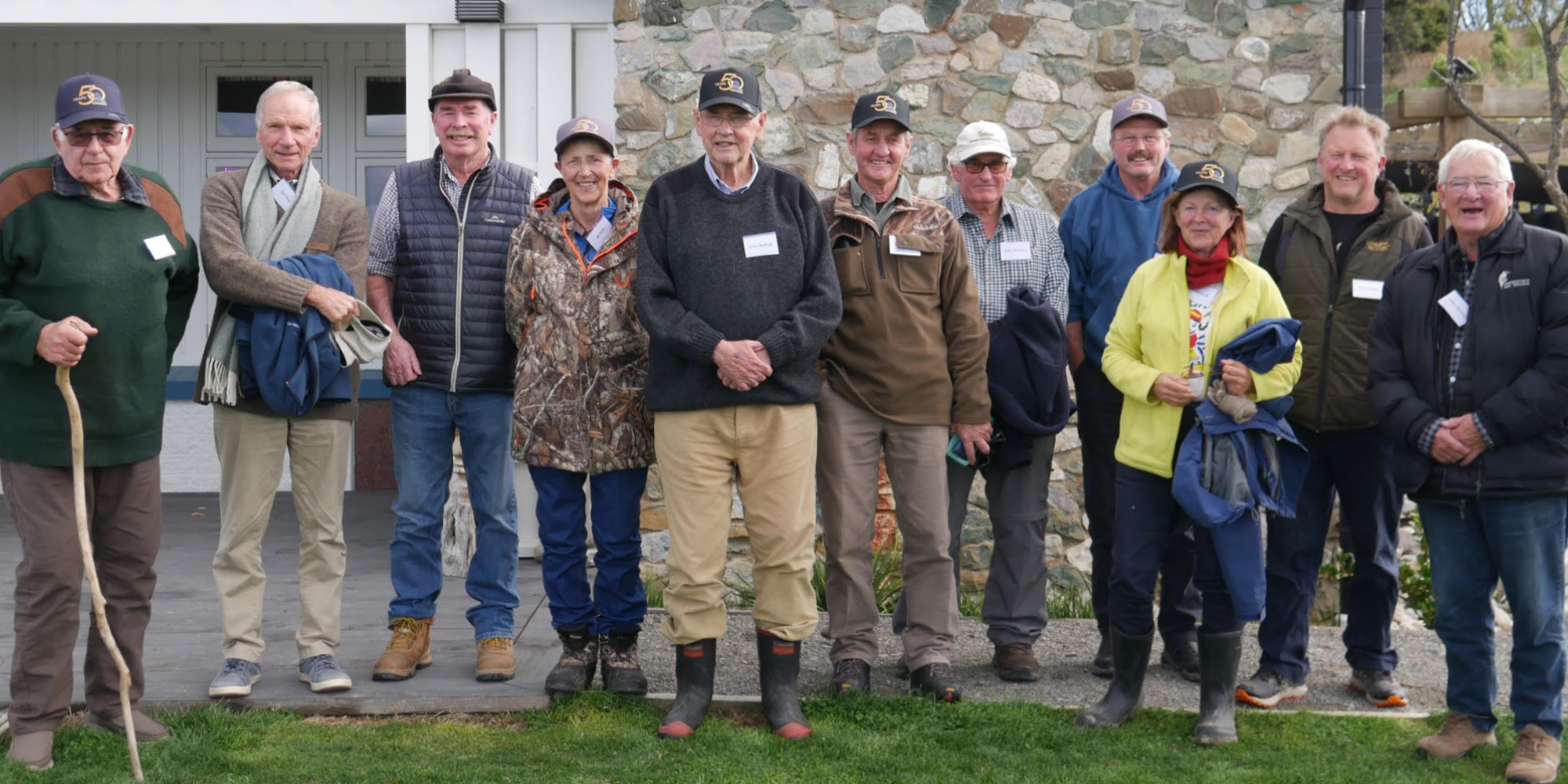
The DUNZ Board and patrons. From left, Jim Campbell, Jim Law, Ross Cottle, Di Pritt, John Bishop, Neil Candy, John Dermer, Will Abel, Adrienne Bushell, Dan Steele and John Cheyne.
In the face of economic headwinds, legislative change and social shifts, many long-standing charitable organisations are taking steps to pivot – and establishing endowment funds to support their new direction. For Ducks Unlimited New Zealand (DUNZ), transferring assets to a Nīkau fund provides a powerful, practical succession plan. For The House of Grace Trust, its fund offers a crucial tool to support the evolution of its service model.
A long history of wetland care DUNZ was founded in 1974 by local wetland and waterfowl enthusiasts Jack Worth, Ian Pirani, Paul Pirani, Neil Hayes and Trevor Voss. Their first project, coined ‘Operation Pāteke’, focused on supporting the recovery of brown teal. Hands-on conservation activities continued to be an important part of DUNZ’s work for over 50 years. In addition to collaborating with the Department of Conservation | Te Papa Atawhai to breed and release whio, the New Zealand blue duck, DUNZ distributed thousands of nesting boxes to increase grey teal populations, fought to conserve Lake Waikare’s waterfowl habitat and supported the development of wetlands on private property. As time went on, DUNZ diversified to support education, provide technical expertise, advocate for wetland care and build awareness of the role wetlands play in our ecosystem. Its Wetland Care Research Scholarships were launched in 2018.
“We still wanted to make a meaningful impact on wetland care and contribute to the future by helping to educate the next generation,” says long-standing DUNZ member Jim Law. As memberships dwindled, red tape increased and the deadline for incorporated society re-registration approached, DUNZ began to think about the future. “It’s been an interesting 50-odd years, but the people on the board now and our membership are getting older. We’re tired, and with societal changes, we are not being replaced by new members,” said DUNZ President Ross Cottle.
After years of hard work, passion and environmental gains, DUNZ’s vision will continue through Nīkau’s Ducks Unlimited Wetland Care Fund. The fund will support the creation and enhancement of wetlands throughout Aotearoa New Zealand and provide postgraduate scholarships to students undertaking wetland restoration and conservation research. “We liken the establishment of this fund to making a will for our organisation,” says member David Smith. “We’ve always worked towards creating a legacy of thriving wetlands, flora and fauna for the next generation. Establishing the fund is just the next chapter in building that legacy.”
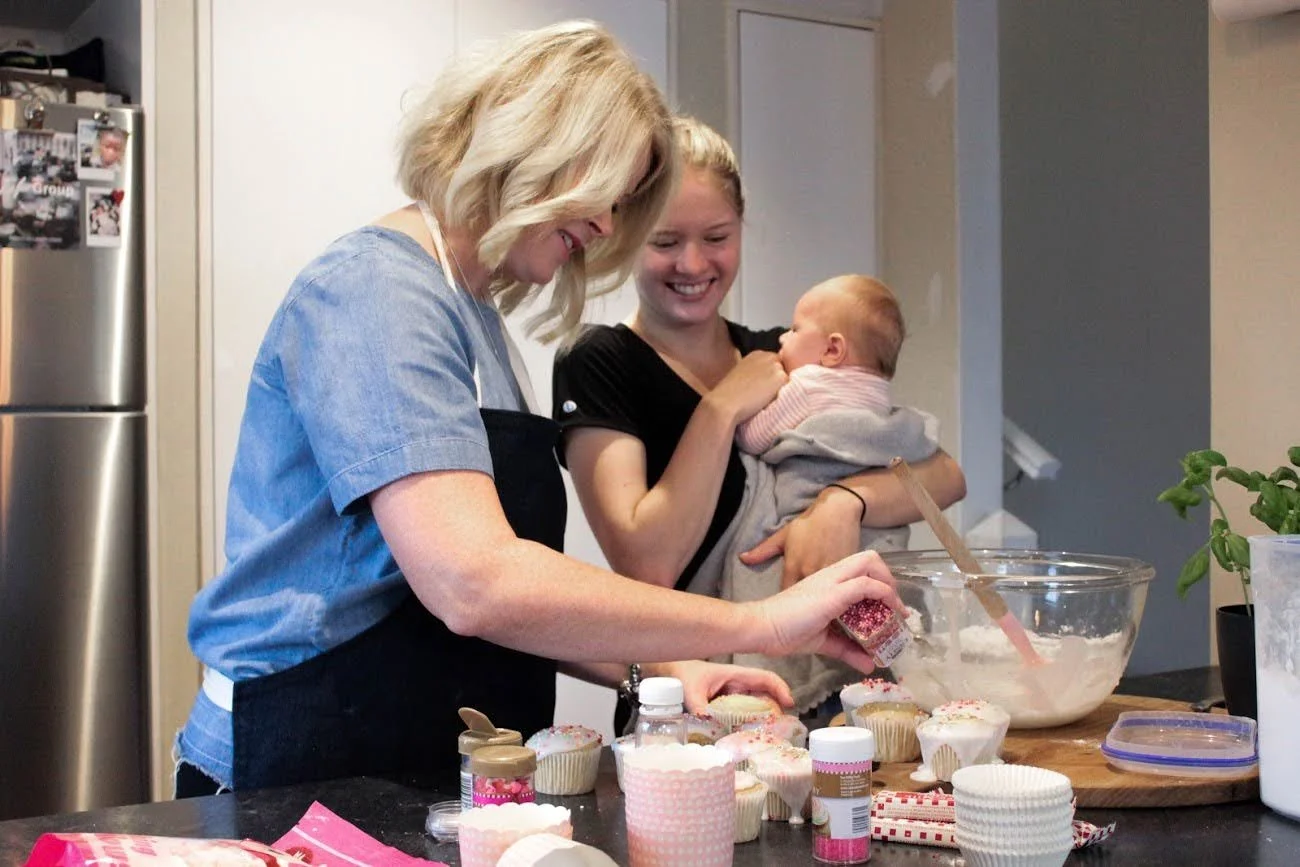
Image via The House of Grace Trust.
Evolving care for young mums
The idea for The House of Grace Trust first came to founders Treena and the late Marcus van Rijssel after taking a young mum into their home. They quickly discovered the lack of other options for women in the same position. In contrast to the isolated and often institution-like homes of the past, Treena and Marcus wanted to provide a family, home-based environment that gave young women the chance to build key life skills, prepare to be the best possible mothers, gain confidence and access support as they navigated this significant life change. The trust purchased its first home in Wellington, followed by Hamilton. Across the two homes, The House of Grace provided safe and loving environments for over 250 young women as they prepared for birth, cared for their newborns and set up a foundation for successful lives.
For former resident Sharna, her time living at The House of Grace was a circuit breaker. Coming from a tough background of domestic violence, family instability and drugs, Sharna moved in to the home at 37 weeks pregnant. There, she found safety and stability as she welcomed her son Noah into the world. “When I lived at The House of Grace, I felt like someone was choosing to support me every day, and I had never felt chosen before,” says Sharna.
A new chapter
As The House of Grace Trust neared its 25th year, the much-loved homes were becoming more expensive to run, and although it was still committed to supporting young women, its service model was becoming unviable. “We know that, much like 20 years ago, young women are facing incredibly hard circumstances,” says Chief Executive Rebecca Bangma. “It was crucial that we maintained our support but in a way that was relevant and flexible to respond to increasingly complex needs.” The House of Grace Trust decided to pivot, ceasing its residential care model and introducing a grants programme to support individuals, organisations and community groups who share its vision of caring for vulnerable mums. Through this programme, it has been able to extend its reach and support young women and their whānau in a range of ways.
After one of The House of Grace’s homes was sold in 2025, the board considered how it could make the most of the proceeds. Establishing The House of Grace Trust Fund with Nīkau Foundation was an effective way to build a reliable source of funding, decrease reliance on fundraising and ensure its story could continue. Future grants distributed from The House of Grace Trust Fund will support young mums to pursue educational or personal development opportunities, fund practical everyday needs and unlock support for those caring for teenage or young mums. “These grants are just another way The House of Grace can be a part of the lives of amazing young wāhine as they experience challenges, enter different life stages and work to be their best selves, for them and their kids,” says Rebecca.
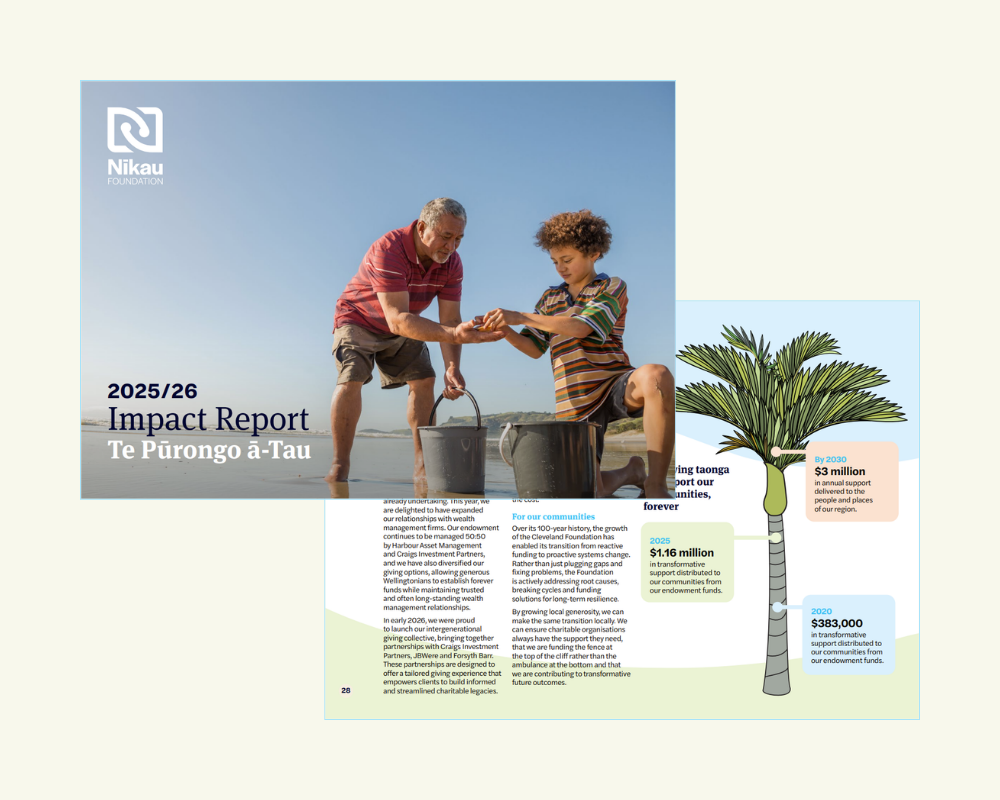
Download our 2025/26 Impact Report
This report, which covers the period from October 2024 - March 2026, features stories of grassroots action across our communities, organisations doing amazing mahi to support the people and places of our region and generous locals, who are leaving transformative legacies for the causes they love. To download, please click below.