

The changing face of philanthropy
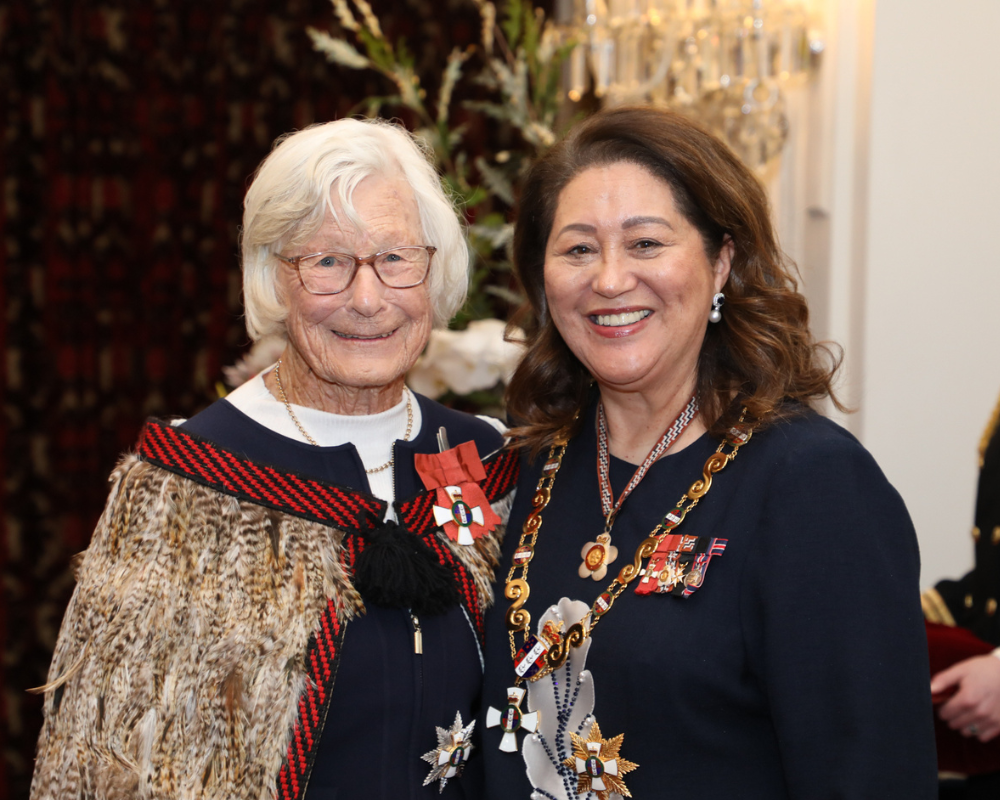
Dame Dorothy Spotswood DNZM at her investiture ceremony for services to philanthropy in May 2026 with Governor-General Rt Hon Dame Cindy Kiro.
When you think of a philanthropist, who comes to mind? Is it Warren Buffet, who has donated over $60 billion to health, education and povertyreduction organisations? Andrew Carnegie, who donated over $350 million to support education? Or Michael Bloomberg, who has donated over $25 billion to a range of charitable causes? Although these are a few of the big names that may spring to mind, as Community Foundations of Aotearoa New Zealand Chief Executive Eleanor Cater says, “The most powerful force reshaping philanthropy right now isn’t a tech billionaire or government policy. It’s women.”
Quiet community contributions
Catalogued in the National Library of New Zealand is a lightly worn photograph, the subject serene, hair neatly pinned and spectacles in hand. Beneath it is a caption: “Edith Sprott, wife of the Bishop of Wellington ca 1940s.” A few pages later, another photo shows a woman standing proudly, a medal of the Order of the British Empire affixed to her lapel: “Lady Jacobina Luke, the wife of Sir John Pearce Luke, Mayor of Wellington.”
Although the history books may remember them as wives and lady mayoresses, Edith and Lady Jacobina made significant contributions to Wellington in their own right. While Edith headed up St Mary’s Guild, a progressive social services organisation active in the early 1900s, Lady Jacobina was instrumental in the establishment of Citizen’s Day Nursery, a childcare facility supporting working mothers from the 1920s. While historical social, environmental and economic factors may not have been conducive to high visibility around women’s community contributions, this is set to change.
Shifting wealth
Over the next 20 years, about $1.6 trillion will be passed down from one generation to the next in Aotearoa New Zealand alone. According to Stats NZ | Tatauranga Aotearoa, the life expectancy in Aotearoa New Zealand is 80.1 years for males and 83.5 years for females. As financial research indicates that 95% of spousal inheritances will go to women, amounting to $1.3 trillion, we can foresee that, alongside the intergenerational wealth transfer, there will be a horizontal one. This provides a compelling opportunity for Aotearoa New Zealand’s charitable sector.
A recent Australian study, She Gives: Growing Women’s Giving, found women tend to give more and in more connected and sustainable ways – 29.39% of women versus 26.08% of men. According to a study published in Nature Human Behaviour, the reasons for this could simply be human make-up, and more specifically the striatum – the part of the brain that processes rewards. As a woman’s striatum is activated by prosocial actions, they are more likely to share and feel a sense of satisfaction by giving to charity.
Working together
Across Aotearoa, women’s giving circles are on the rise, providing an effective way to give in a collaborative, impact-focused way. 45South, the community foundation for the Queenstown-Lakes District, launched its Impact100 Wakatipu giving circle in 2020 with the aim of engaging 100 women to give $1,000 annually. Today, it has given out over $1.1 million in grants, working together to distribute these funds in a way that is responsive and relevant to the needs of the region.
This collaborative approach is mirrored across the globe. “Our research shows that women actively seek input from a wide ecosystem – advisers, peers and charity leaders – which naturally lends itself to collaborative giving,” says Juliet Agnew, Head of Philanthropy at Barclays Private Bank. The community foundations model, which co-mingles charitable donations, invests them for long-term impact, connects local generosity with local need and shares decision-making, is well-poised to support women’s giving aspirations.
“We know that collaboration is key for influencing positive change,” says Nīkau Foundation Chief Executive Emma Lewis. “When we work together, we grow the funding pool. We harness a collective generosity that can not only respond to local need today but play an important role in building long-term community resilience.”
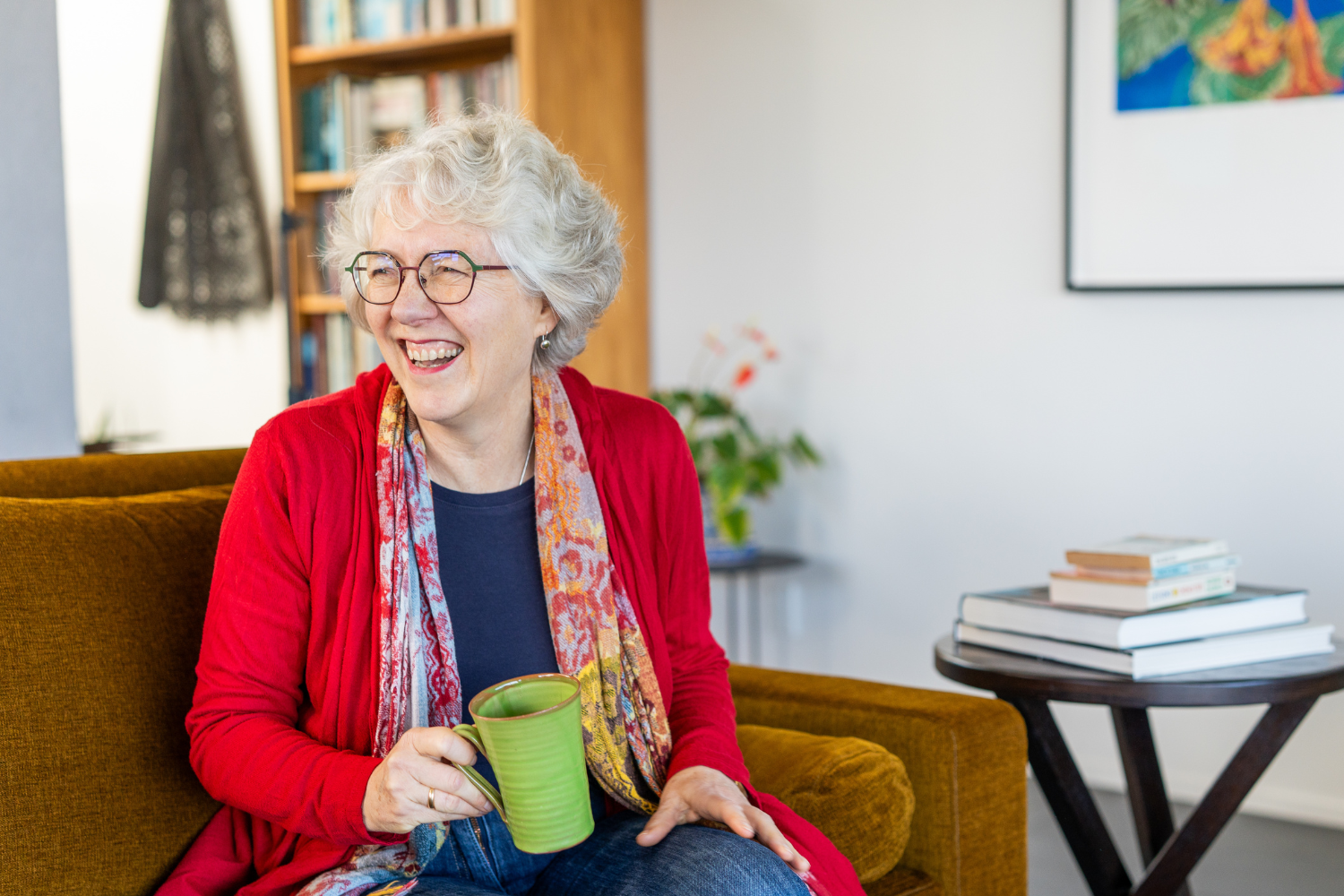
Nikau donor, Karen Schellevis established the Eva and Johannes Schellevis Fund in memory of her parents to give back to new migrants and former refugees.
Business sensibility
In the 1926 New Zealand Census, it was found that only 4.7% of all working women were classified as employers. Today, this percentage sits at almost 32%. Although there is little data showing the proportion of female-owned financial assets domestically, a recent US report from McKinsey & Company found that, by 2030, $11.4 trillion (47%) of assets will be owned by women. More than ever in history, women are making their own money, building their own businesses and, it seems, channelling their corporate sensibility into their philanthropic endeavours.
Having built a successful scaffolding business, Wellingtonian Claudia Samitz wanted to make sure that her charitable legacy was practically handled and positioned to deliver ongoing impact. Rather than establishing her own charitable trust, which would rely on entrusting loved ones to carry out her wishes, Nīkau’s Claudia and Nick Pro Animal Fund will support her and her late husband’s passions in a streamlined, practical way. “When you establish a business, you do so with the intention that it will sustainably grow,” says Claudia. “I liked that, through my fund, I could give with the same intention.”
A tool to assert autonomy
Perhaps due to historical social experiences, women’s attitude to earning and giving away money also differs starkly from men’s. “We have different relationships and views about money as women,” says former Auckland Foundation CEO Dellwyn Stuart. “For men, money often means success, prestige and arriving. For women, it represents the idea of freedom and the ability to get things done.”
Local Beth Greensmith was brought up in a time when professional avenues were limited and women were expected to follow a traditional path. Forever one to go against the grain, she started her career as an occupational therapist before opening her own fashion business and investing in real estate. Throughout her lifetime, Beth has set her own rules, taken the road less travelled and been the master of her own destiny. Her decision to establish the Beth Greensmith Fund with Nīkau Foundation represents not only a meaningful gift for causes close to Beth’s heart – including environmental conservation, breast cancer support and public art – but a powerful statement of autonomy.
Shifting the power
If you were to search news sites for examples of transformative contemporary philanthropy, you would probably land on an article profiling MacKenzie Scott. An American novelist and early investor in Amazon, it is estimated that Scott has given away over US$26.3 billion (NZ$43 billion) to organisations working in health, gender equity, climate change and education. Although her donations come in their multi-millions, they come with no conditions, placing trust in recipient organisations to deliver their work without intervention. “I believe the gifts will do more good if others are free from my ideas about what they should do,” she says in a medium.com article.
This is also represented in Barclays’ research. “Women are more interested in long‑term partnerships with charities,” Juliet Agnew says. “[They prefer] approaches that shift power to the organisations and communities doing the work.” This trust-based approach is being emulated locally by well-known philanthropist Dame Dorothy Spotswood. Through the projects she backs, such as Cuba Street’s Dorothy Spotswood Charitable Hospital, she identifies herself as the ‘wholesaler’ and the recipient organisation as the ‘retailer’. This model allows the organisation to secure the support they need while being empowered to deliver services in the way they know best. Even in her earliest philanthropic experience, where she and her business and life partner Sir Mark Dunajtschik committed $1 to the New Zealand Deerstalkers Association for every $1 raised, the focus was on setting the blueprint for success. “Establishing the infrastructure is the part that we play,” says Dame Dorothy. “Then the community can do what they do best.”
A new chapter of transformative philanthropy
In Edith Sprott and Lady Jacobina Luke’s era, even the most significant of women’s community contributions were poised to be forgotten. However, as women’s wealth continues to grow, they collaborate to effect positive change and they engineer their own brand of philanthropy, they are quickly becoming a powerful force to shape the future. If we were to fast-forward 100 years into the future and ask who comes to mind when you think of a philanthropist, will it still be Warren, Andrew or Michael? Or will Anna, Sia, Priya or Mārama be taking centre stage?
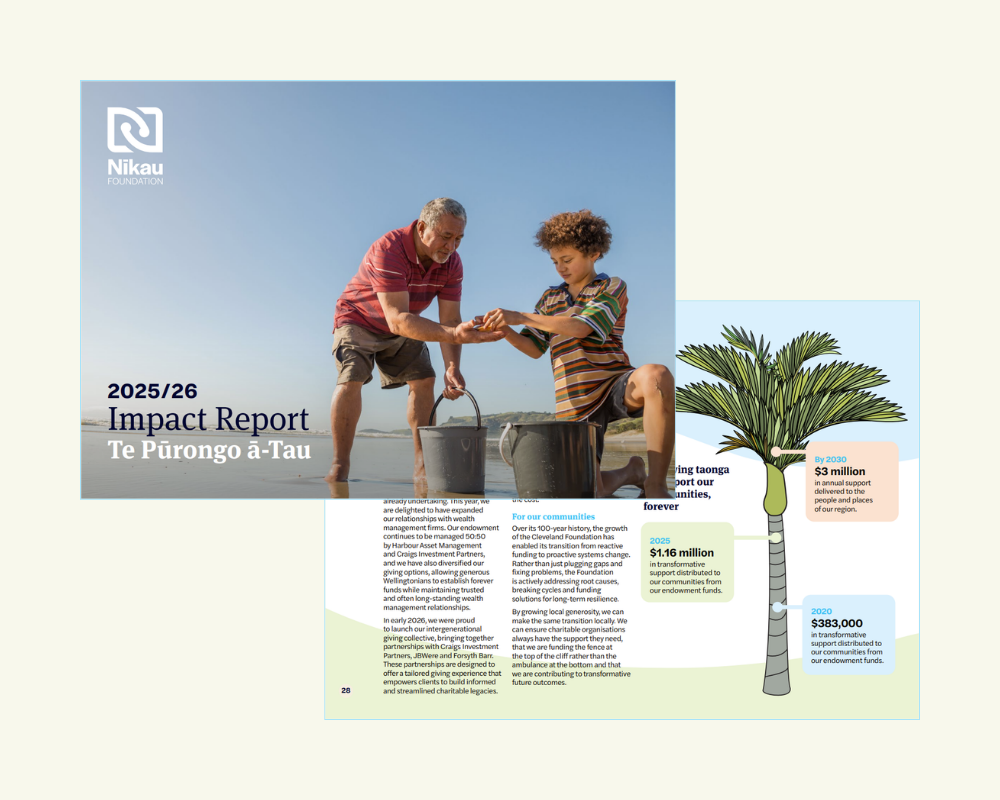
Download our 2025/26 Impact Report
This report, which covers the period from October 2024 - March 2026, features stories of grassroots action across our communities, organisations doing amazing mahi to support the people and places of our region and generous locals, who are leaving transformative legacies for the causes they love. To download, please click below.