Future-proofed support for Aotearoa New Zealand’s ageing population.
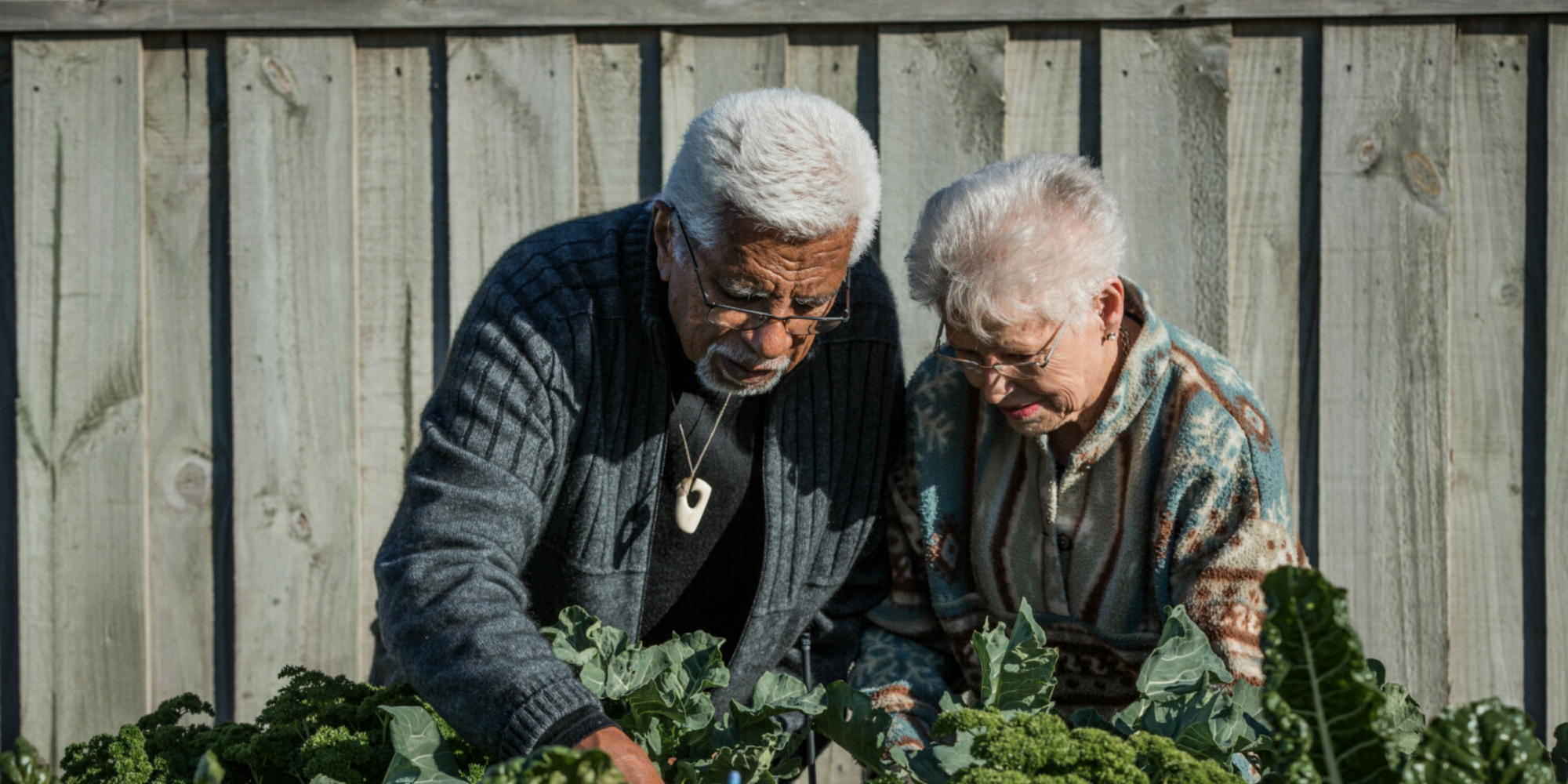
We’re living longer, staying healthy as we age and continuing to make a meaningful contribution to our communities as we enter our later years. While it’s certainly something to celebrate, it’s putting pressure on already strained services, including our health system, housing, infrastructure and social services.
The situation is not expected to ease any time soon. As a society, Aotearoa New Zealand is getting older – currently around 17% of New Zealanders are over 65 years old, and 40 years from now, it’s predicted that around a third of us will be 65 or older. With an ageing population comes an increase in the need for targeted care – illnesses like dementia, cardiovascular diseases and arthritis become more prevalent in our older years.In the face of these projections, it’s important to reflect on the work that is already being done, how the for-purpose sector is preparing for the future and what we can do today to support the needs of the next generation.
Looking after our elders
Even now, the aged care sector is feeling the squeeze. Providing a continuum from residential rest home to hospital and dementia-level care, Newtown’s 151-bed Te Hopai Home and Hospital is at capacity. “We have a very high occupancy rate at Te Hopai,” says Chief Executive Pakize Sari. “It’s currently around 99%, with a waiting list for rest home and dementia-level care.” The reasons for this are threefold. While there are more people in need, there is also a growing demand for dementia care and limitations when it comes to accommodation and service expansion. “We would welcome the opportunity to expand our services and increase the number of beds available to meet growing demand. However, developing new facilities is costly, suitable land in central Wellington is limited and several sites acquired by private providers have yet to progress to construction.”
With Te Whatu Ora | Health New Zealand funding limited, Te Hopai must rely on alternative sources of support to ensure it can deliver services sustainably, keep up with demand and gear up for the future. Funding from Nīkau helped Te Hopai to fund a range of initiatives, from purchasing new palliative care equipment to supporting cognitive enhancement therapy. “Activities like cognitive enhancement therapy can help maintain cognitive function and independence,” says Pakize. “These enhanced services are not covered by standard funding and can only be delivered through grants and donations.” Preparing for the future of aged care is high on the agenda for the Te Hopai board. “The residential care model needs to change. We think it will mean people being helped to stay in their own homes for longer before coming into institutional care. Te Hopai wants to be the bridge between residential services and the community, so we’re looking at how we can adapt our models of care.”
Growing support for dementia care
As our communities age, health challenges such as dementia will increase. “Although there are many factors that can contribute to the development of dementia, age is a predominant risk factor,” says Dementia Wellington Chief Executive Stephanie Clare. There are currently more than 70,000 people living with dementia across Aotearoa New Zealand. That is predicted to increase to 170,000 by 2050.
To prepare for the future, Dementia Wellington has established the Dementia Wellington Fund with Nīkau Foundation. This will play a vital part in supporting its mahi and mission of supporting people living with dementia and their families, creating dementia-friendly communities and advocating for key needs. The Dementia Wellington Fund means the organisation can cater for the growing demand for its services, while building long-term financial resilience. “Only people who have been impacted by dementia truly know how challenging it can be,” says Dementia Wellington Chair Anna Shires. “The fund provides a way to ensure Dementia Wellington is there to support others on similar journeys in a powerful and future-proofed way.”
Culturally tailored programmes
For many organisations, offering culturally tailored services is important. Arthritis New Zealand | Mateponapona Aotearoa reflects the diversity of our communities through its Wai Ora programme. Developed in alignment with Māori hauora (wellness) values and principles, its water-based exercise programmes help to keep older generations active and ease pain caused by the disease. “Having my culture reflected in the programme made me feel valued and respected. It’s not just about managing arthritis. It’s about reclaiming my wellbeing,” says a 73-year-old participant.
Similarly, Age Concern Wellington developed Omai Fa’atasi (Come Together) to bring together Pasifika seniors for fun, learning and kai. This programme acknowledges a rapid increase in the number of Pasifika seniors living in Porirua – 88% between 2013 and 2023 and a 28% increase in seniors living alone – and is designed to tackle loneliness. Age Concern Wellington Region Chief Executive Stephen Opie says recent years have been tough for many seniors. “Age Concern is getting more complex referrals. It’s no longer just isolation and loneliness, but mental health, housing issues and financial stress,” he says. “We are at capacity, and with a rapidly increasing senior population, we’re concerned about what the future holds for them in our region.”
Stephen says Omai Fa’atasi has been successful in bringing together many seniors from at least six Pacific nations and engaging them in exercise, games, craft activities and educational workshops. “With Nīkau’s support, we’ve built trust and awareness, developing strong relationships with seniors across our community and with local organisations providing support. The group has a warm, vibrant community feel. Seniors who previously stayed home are now actively engaged with their wider community, enjoying new friendships and opportunities.”
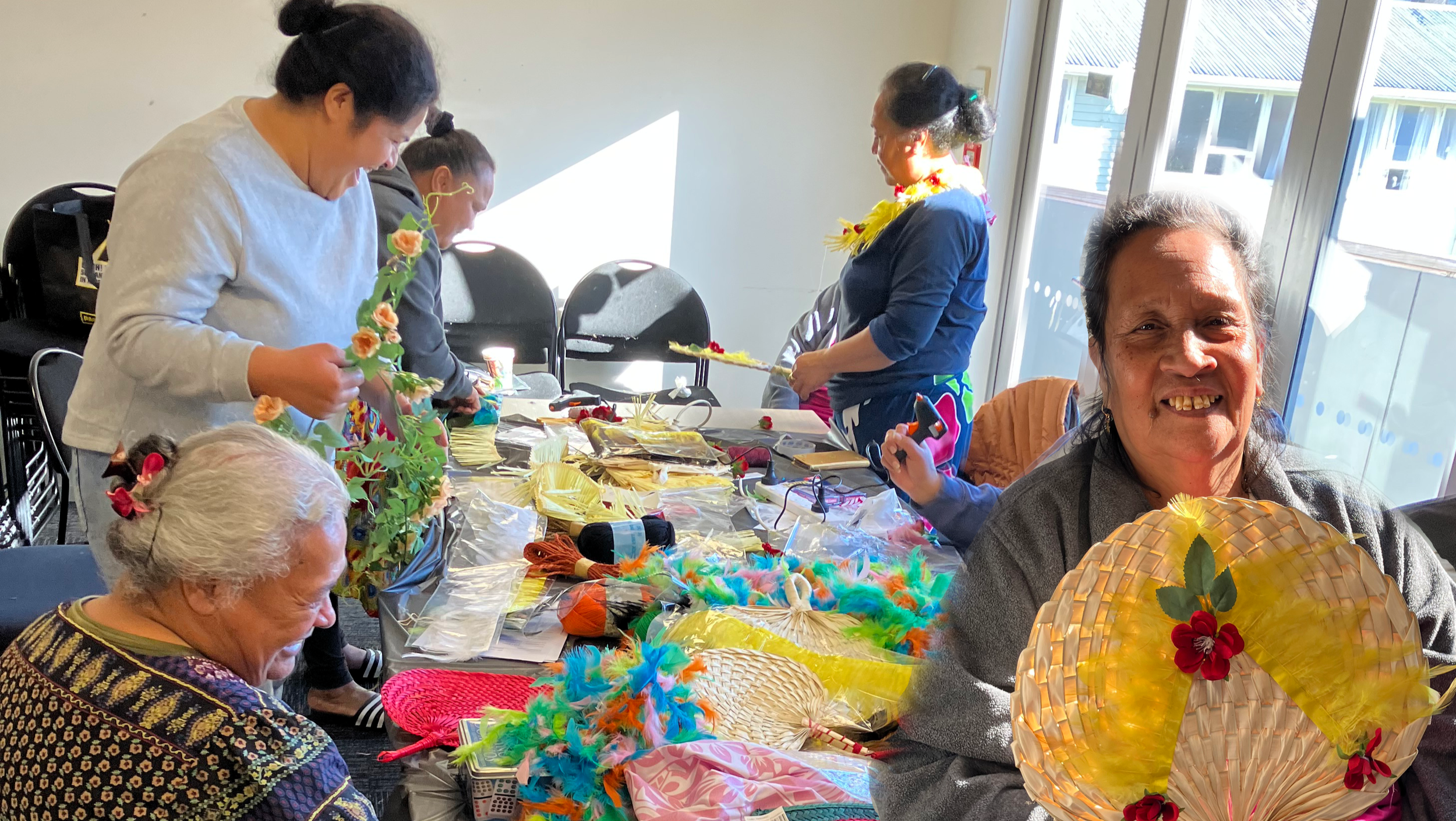
Age Concern Wellington’s Omai Fa’atasi (Come Together) programme brings together seniors from six Pacific nations for fun, connection and kai.
Building a strong philanthropic ecosystem
As our population continues to age, demand for help will keep increasing. While government will continue to play an important role, philanthropic support will also need to grow. For many Nīkau donors, naming aged care, dementia support or older communities as an area of support in their funds is an effective way to preempt our region’s evolving challenges and build a reliable funding stream to support the next generations. For donors Dilys Grant and Annabel McCallum, naming dementia care in the Grant McCallum Fund was a way to honour a friend. “We’ve had firsthand experience of a very good friend with dementia who sadly passed away,” says Annabel. “We saw the support that was available to him and his whānau. To think our fund could make a difference to the support available to people or their families and that our fund could potentially contribute to some more research into the causes and treatment of dementia is enormously rewarding.”
“As a community foundation, Nīkau is building flexible funding streams that can respond not just to the needs of today but those in the future,” says Chief Executive Emma Lewis. “What we do today counts, and by pre-empting the challenges of tomorrow, we can pass down a better future to our communities.”
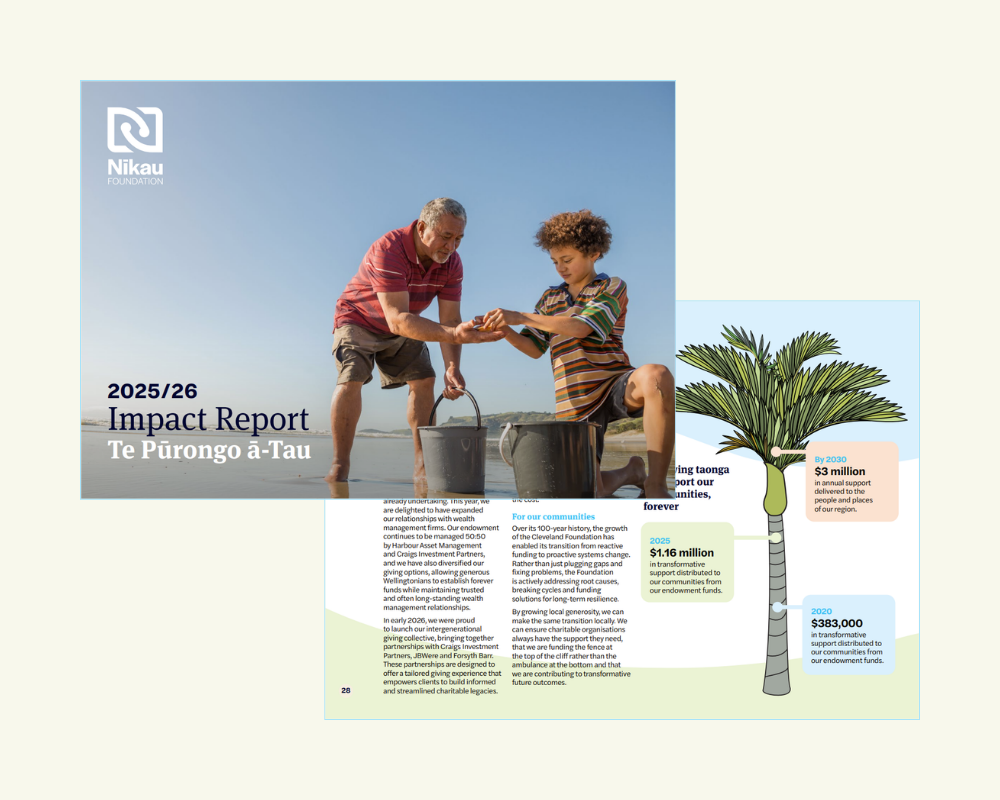
Download our 2025/26 Impact Report
This report, which covers the period from October 2024 - March 2026, features stories of grassroots action across our communities, organisations doing amazing mahi to support the people and places of our region and generous locals, who are leaving transformative legacies for the causes they love. To download, please click below.